
Why Comp Titles Are More Fun Than You Think
Sometimes the best way to understand your own book is to surround yourself with someone else's.
Of all the sections in a book proposal, the comp titles section might have the worst reputation.
Writers dread it. They tell me it’s overwhelming, confusing, or impossible. They worry they haven’t read enough books. They convince themselves someone has already written their exact idea. They get lost trying to find the “perfect” comparisons and end up staring at a blank page.
I understand why. But, I think we’ve been looking at this section all wrong.
When I was finishing the proposal for a cookbook about pairing sake with everyday home cooking, I was preparing what I hoped would be the final draft before sending it out to literary agents. Like most writers, I started second-guessing myself.
Were these really the right comp titles?
Had I missed something?
Was there a better way to position the book?
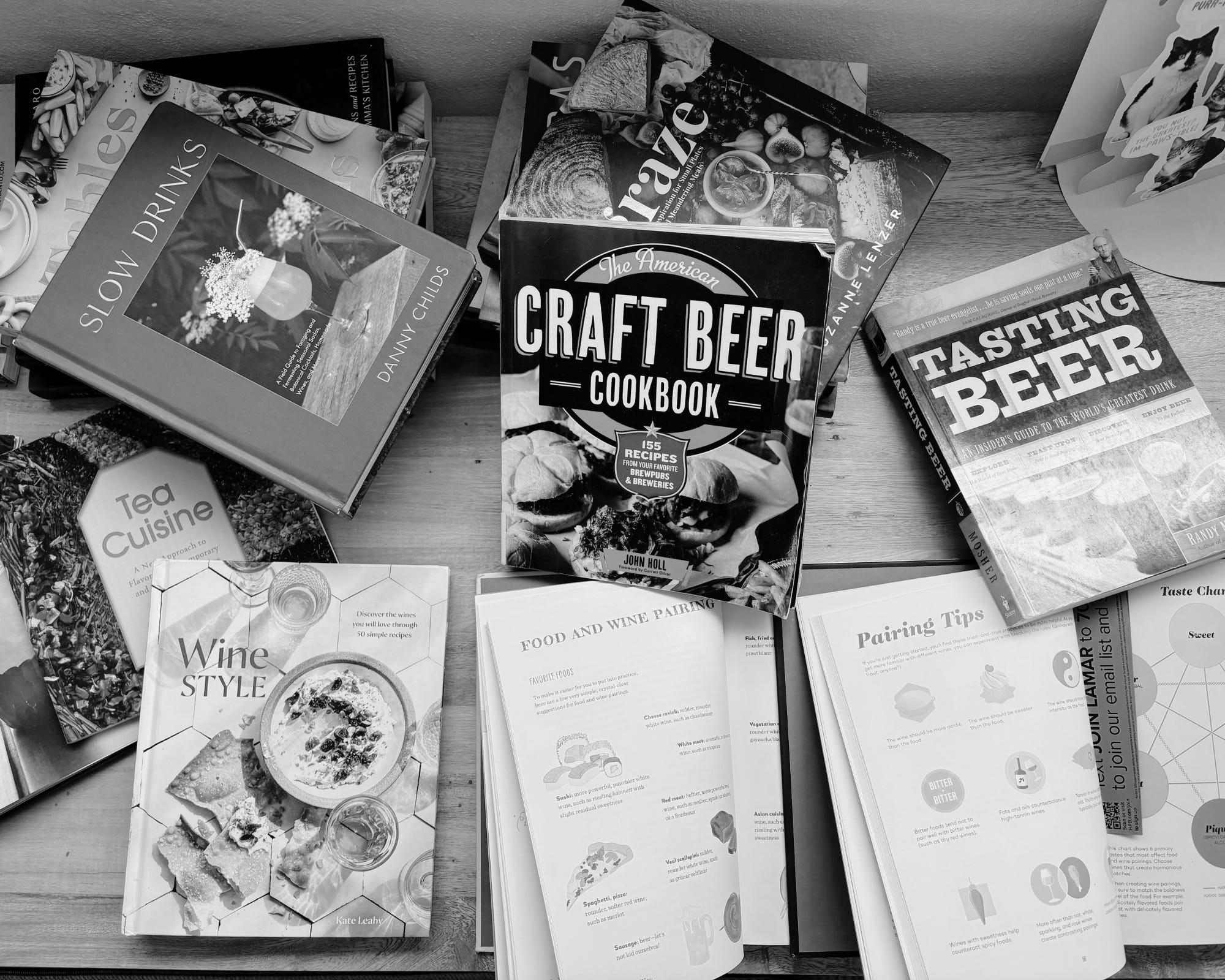
So I pulled every potential comp off my bookshelf. Some I’d picked up in used bookstores. Others I’d ordered new online after reading about them somewhere. I’d spent afternoons sitting cross-legged in Barnes & Noble with stacks of books spread around me, flipping between introductions, tables of contents, and jacket copy. Friends had loaned me a few titles I couldn’t find anywhere else.
Soon my dining room table disappeared beneath books.
There were wine pairing books (more wine pairing books than I knew existed). Books about beer pairings. Every English-language sake book I could get my hands on. Books from the 1960s on tea pairings. Japanese home cooking. Food science. Hospitality. Some were crisp and new while others had clearly been opened hundreds of times before they found their way to me.
And somewhere in the middle of all that, I realized I wasn’t just doing market research anymore. I was actually enjoying myself.
Each author had approached the subject from a different angle. Some focused on technique, while others included gorgeous illustrations on flavor notes. Others were full of family stories or how to set a perfect table for company. There wasn’t one correct way to write about pairing drinks with food. There were dozens. Maybe hundreds (seriously, so many wine pairing books).
Each book was making a different argument about why this subject mattered. And, that’s when the comp titles section stopped feeling like homework and became one of my favorite parts of the proposal.

I once found the perfect comp title for a client’s thought leadership book while browsing the Little Free Library in our neighborhood. I went home with The Power of Mattering and my daughter went home with Santa's Underwear. We both found exactly what we were looking for.
That’s what comp titles really are — an invitation to immerse yourself in the conversation your book is joining. They remind you that publishing isn’t about inventing an entirely new topic, but about contributing something new to an existing conversation.
Every great book sits beside other books. Your job isn’t to prove those books shouldn’t exist. Your job is to explain why yours belongs next to them. I think that’s a much more interesting question.
As I worked through those books, I found myself asking different kinds of questions.
Who is this book written for?
How does its tone differ from ours?
What’s the promise on the cover?
What’s missing?
How is this author organizing information?
Those questions didn’t just strengthen the comp titles section. They sharpened the entire proposal, and in many ways, the book itself.
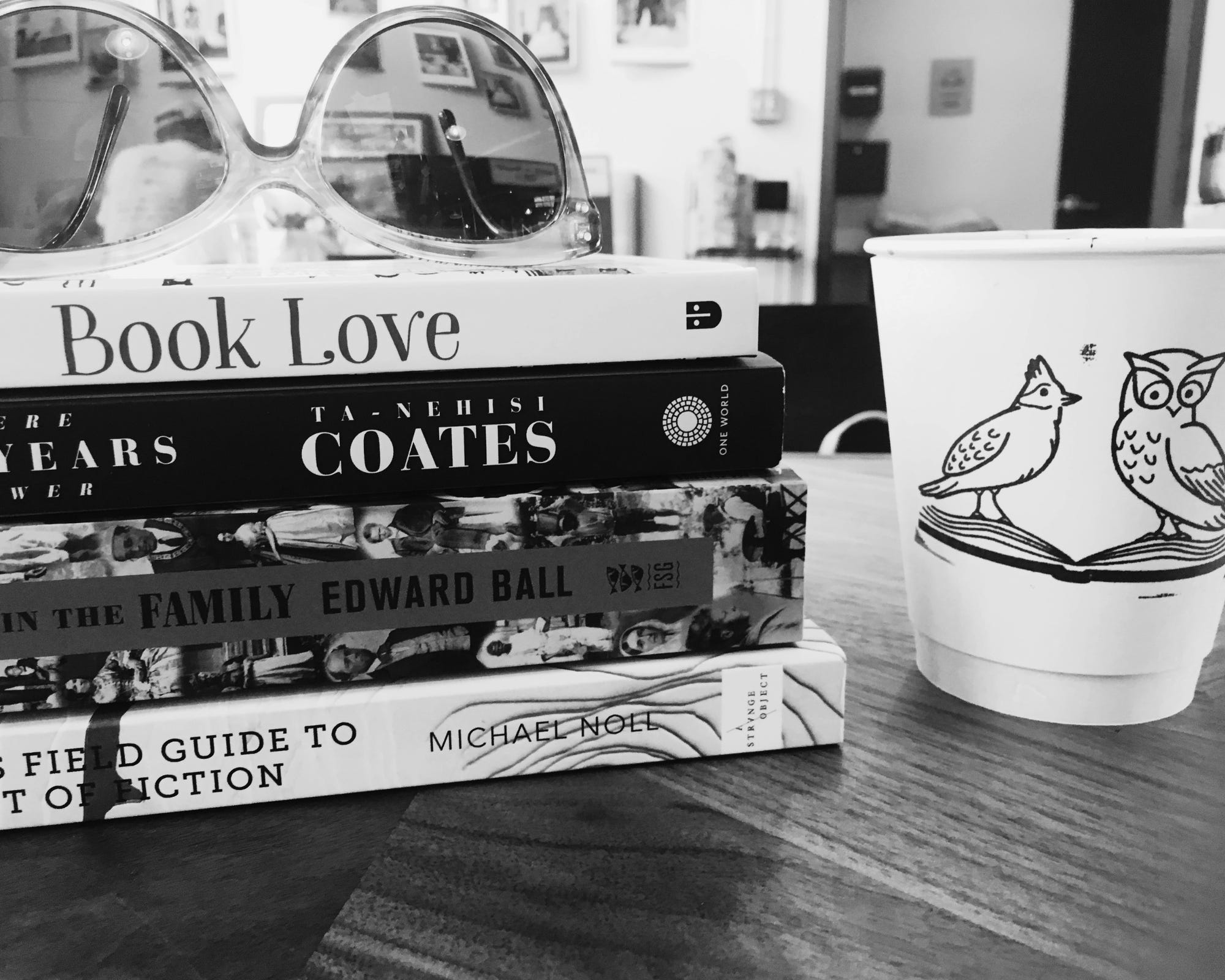
Comp title research has a funny way of looking exactly like my favorite hobby.
One of the biggest misconceptions about comp titles is that you’re looking for books that are exactly like yours. You’re not. You’re looking for books that illuminate different parts of your project. One might share your audience while another shares your voice. One comp might closely mirror your structure while another hits on your visual style. I’ve comped to similar author platforms with entirely different subject matter (but, within the same genre). Together, your comp titles help you — and eventually an agent or editor — understand the project you are trying to bring to life.
I’ve seen the same thing happen over and over with our book proposal intensive students. A writer comes into a workshop convinced they have no idea what their comp titles are. Then they start reading, visiting bookstores, and ordering books. They borrow them from friends. Like I love to do, they fill a table with possibilities. Suddenly, they’re geeking out with their book nerd self and remembering why they wanted to write their book in the first place.
So if you’re stuck on the comp titles section, here’s my first piece of advice:
Let yourself enjoy it.
Go wander through a bookstore. Pull books off the shelf. Read introductions. Compare tables of contents. Notice how different authors solve the same problem in completely different ways. Follow interesting rabbit trails. Let your inner book lover take over for a while.
You may discover that the comp titles section isn’t interrupting the creative process. It is enlivening it.
Because somewhere between the stacks of books, the scribbled notes, and the conversations you’re having with authors you’ve never met, you’ll begin to see your own project more clearly.
And that’s exactly what a good comp section is supposed to do.
If you'd like to experience this process in community, applications are now open for our 12-week Book Proposal Intensive at Write Up. Together, we'll work through your proposal section by section, with expert feedback, accountability, and a cohort of writers who will help you sharpen your ideas every step of the way. You'll also meet with three literary agents to learn what they're looking for and have the opportunity to pitch your project. If you've been meaning to write a proposal but aren't sure where to start — or simply don't want to do it alone — we'd love to have you join us.
This article was contributed by Kelsey Erin Shipman, a memoir and cookbook ghostwriter, educator, and co-founder of Write Up. She's currently on submission with one book proposal, trying very hard not to check her email every five minutes, and writing another proposal because sleep is for the weak. Read more of her personal writing at Cheese Toast with White People.
You know I love me a comp section! I even call it my favorite section of all book proposals! https://notsosecretagent.substack.com/p/cookbook-proposal-guidelines?r=6lue7
"That’s what comp titles really are — an invitation to immerse yourself in the conversation your book is joining." This is a genius observation, and one I needed to read. I'm enrolled in the the twelve-week proposal-writing seminar, and this makes me feel hopeful about all I'm about to learn. But the real stretch will be this: If Kelsey and Hannah can make me enjoy (or even complete!) the marketing section, it'll be a BIG miracle. But I'm open to miracles!